Saudi Arabia’s customer-experience bar has shifted fast. In 2026, a five-minute wait at a bank branch or a slow drive-thru lane is no longer an inconvenience customers shrug off — it’s the detail that shows up in a one-star review by the time they reach the parking lot. Businesses closing that gap are leaning on two distinct but related technologies: digital queueing for lobby traffic, and dedicated drive-thru systems for lane traffic. This piece looks at both from the operator’s side — what to evaluate, what it costs to get wrong, and how the back-office billing side has to keep pace.
The Real Cost of an Unmanaged Queue
Unmanaged queues don’t just annoy customers — they quietly drain revenue. Staff spend energy managing frustration instead of transactions, abandonment rates climb, and social reviews mention “the wait” more often than the product itself. For any multi-branch operator, this is a measurable cost, not a soft one.
Three signals usually mean it’s time to replace a manual or paper-ticket process:
- Peak-hour wait times regularly exceed 15 minutes at more than one branch
- Staff can’t see queue length without physically checking the lobby
- There’s no data trail connecting wait time to staffing decisions
Choosing a Queue Management System in Saudi Arabia
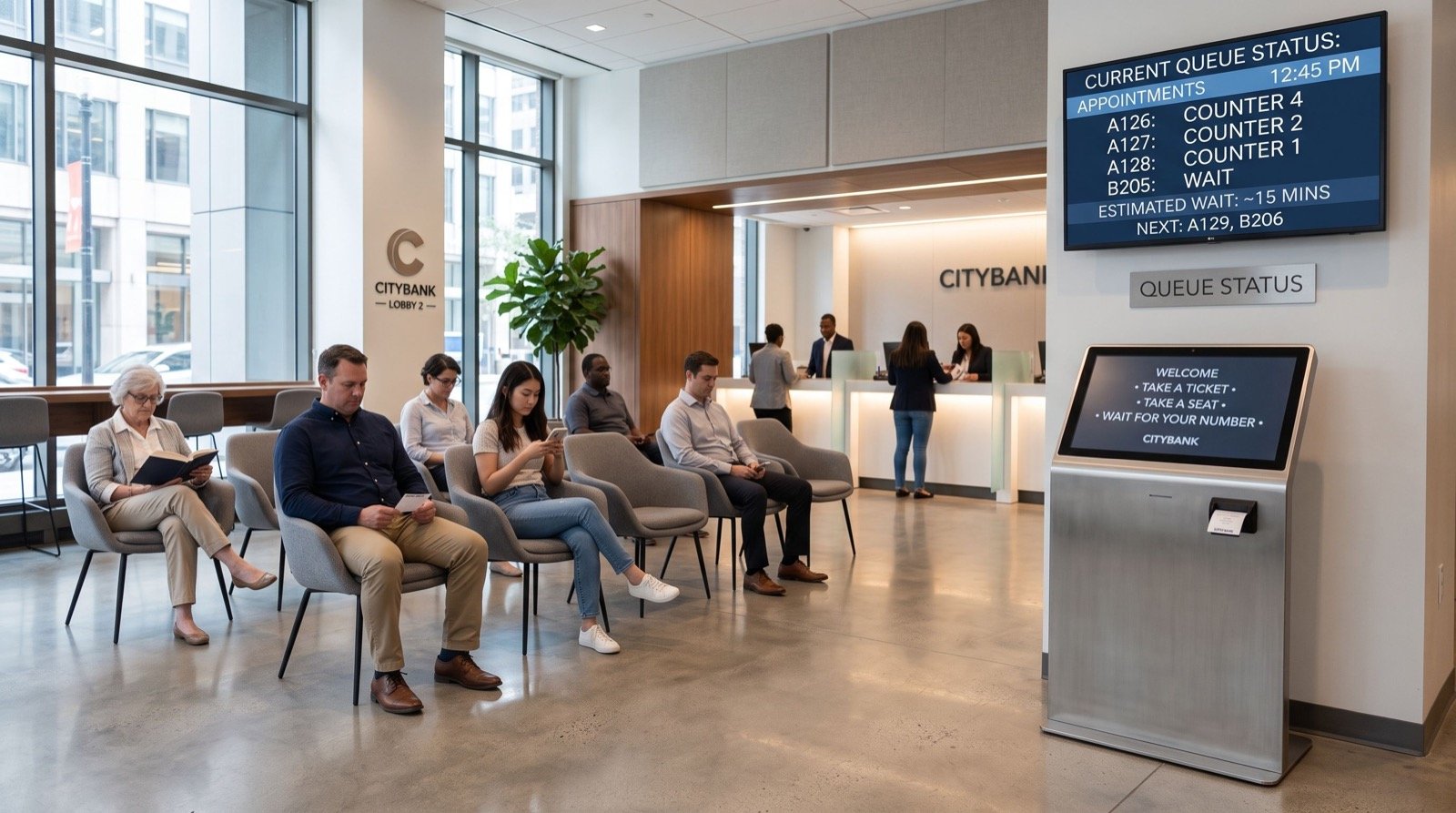
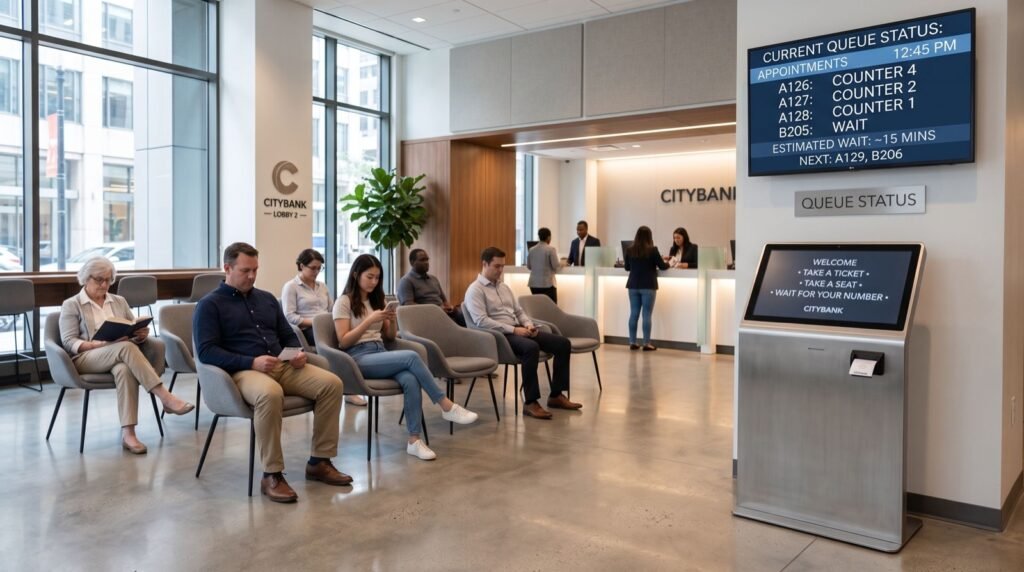
Selecting a queue management system in saudi arabia is less about the kiosk hardware and more about what happens after the ticket is issued. Does the platform notify customers by SMS so they can wait in a car instead of a lobby? Can a manager pull a same-day report broken down by branch and service type? Is Arabic the default language rather than an afterthought?
These questions matter more in the Kingdom specifically because service expectations are being set simultaneously across government, banking, telecom, and healthcare — a slow system in one sector gets compared instantly to a fast one in another.
Why Drive-Thru Lanes Need Their Own Playbook
A drive-thru lane behaves nothing like a lobby queue — there’s no ticket, no waiting room, and the entire transaction has to happen inside a single pass through three or four points: menu board, order confirmation, payment, and pickup. Any delay at one point backs up every car behind it.
PAR Drive Thru in Saudi Arabia deployments address this by timing each stage of the lane separately, flagging bottlenecks in real time rather than waiting for a manager to notice a line stretching onto the street.
Lobby Queue vs. Drive-Thru Lane: How the Metrics Differ
| Metric | Lobby Queue System | Drive-Thru System |
|---|---|---|
| Primary unit measured | Minutes waited per ticket | Seconds per vehicle, per stage |
| Customer notification | SMS / screen call | Order-confirmation screen |
| Bottleneck visibility | Branch dashboard | Per-lane timer alerts |
| Typical sectors | Banking, government, healthcare | Quick-service restaurants |
The Back Office Has to Keep Pace Too
Faster service at the counter or the window is only half the win. Behind it, invoicing, CRM records, and tax compliance have to move at the same speed, especially with Saudi Arabia’s phased e-invoicing rollout changing how every transaction gets recorded. Businesses that speed up the front of house while leaving billing manual just relocate the bottleneck.
For operators untangling that exact problem, the team covering reliable local experts walks through how to connect electronic invoicing with day-to-day CRM and billing work rather than running them as two unconnected systems.
Saudi Arabia’s digital-economy push is well documented at the national level too — the Kingdom’s official Vision 2030 program outlines the broader push toward digitized public and private services that makes this kind of investment a strategic expectation rather than a cosmetic upgrade; see Vision 2030’s official site for the program’s digital transformation goals.
A Vendor Selection Checklist for 2026
Most operators in Saudi Arabia aren’t choosing between “a system and no system” anymore — they’re choosing between several competing vendors who all claim to solve the same problem. A short checklist keeps the evaluation honest:
- Does the vendor support Arabic as the default language, not a translated afterthought?
- Can the platform export branch-level reports without a support ticket every time?
- Does the contract include local installation and maintenance, or is support handled remotely from another time zone?
- Is pricing per-branch or enterprise-wide, and does it scale sensibly as the business grows?
- Does the vendor have reference deployments in the same sector — banking, healthcare, retail, or food service?
Skipping this checklist is how businesses end up locked into a two-year contract with a system nobody at the branch level actually wants to use.
Measuring ROI After a Queue or Drive-Thru Upgrade
Numbers convince budget holders faster than anecdotes. After rollout, operators should track average wait time, abandonment rate, and — for drive-thru specifically — average seconds per vehicle during peak hours. Comparing these figures 30 and 90 days post-launch against the pre-launch baseline is usually enough to prove the investment paid for itself.
Branch managers who also track customer complaint volume tend to see a sharp drop within the first full quarter, since “the wait” is consistently one of the top-cited frustrations in service-sector reviews across the Kingdom.
Frequently Asked Questions
Is queue management the same technology as drive-thru management?
No. They solve related problems — reducing wait and improving flow — but queue management handles lobby and ticket-based traffic, while drive-thru systems manage a moving lane with its own timing and order-accuracy requirements.
How quickly can a mid-size branch network roll out a new queueing platform?
Most cloud-based platforms can go live branch-by-branch within a few weeks, since the hardware footprint is usually a kiosk or tablet plus a display screen rather than a full point-of-sale replacement.
Do these systems work for Arabic-first customer bases?
Yes — this should be a non-negotiable requirement in 2026. Look for Arabic as the default interface language, not a toggle buried in settings.
Why connect queueing data to CRM and billing at all?
Because wait-time and service data are far more useful when tied to a customer record and an invoice trail — it turns an operational metric into a business intelligence asset.
Where Businesses Commonly Stall Mid-Rollout
The most common failure point isn’t the technology itself — it’s momentum. A branch network buys a queueing platform, rolls it out to two or three flagship locations, and then stalls before reaching the rest of the network because nobody owns the project past the pilot stage.
Assigning a single internal owner — not a vendor, an internal operations lead — to track rollout progress, collect feedback from branch staff, and report wait-time numbers monthly is the single biggest predictor of whether a project reaches full-network coverage within a year instead of stalling at 30 percent.
Bottom Line for 2026 Operators
Saudi Arabia’s service businesses are being judged on speed from the lobby to the drive-thru lane to the invoice in a customer’s inbox. Treating queue management, drive-thru technology, and billing integration as one connected strategy — rather than three separate purchases — is what separates brands customers trust from ones they complain about. Businesses that assign clear ownership of the rollout, measure results honestly, and keep the back office moving at the same pace as the front line are the ones still winning this comparison a year from now.